

SC: Medically Unfit UP Constable’s Dismissal Restored; Uniformed Posts Need Caution
 Copy Link
 Share
Share Save
Save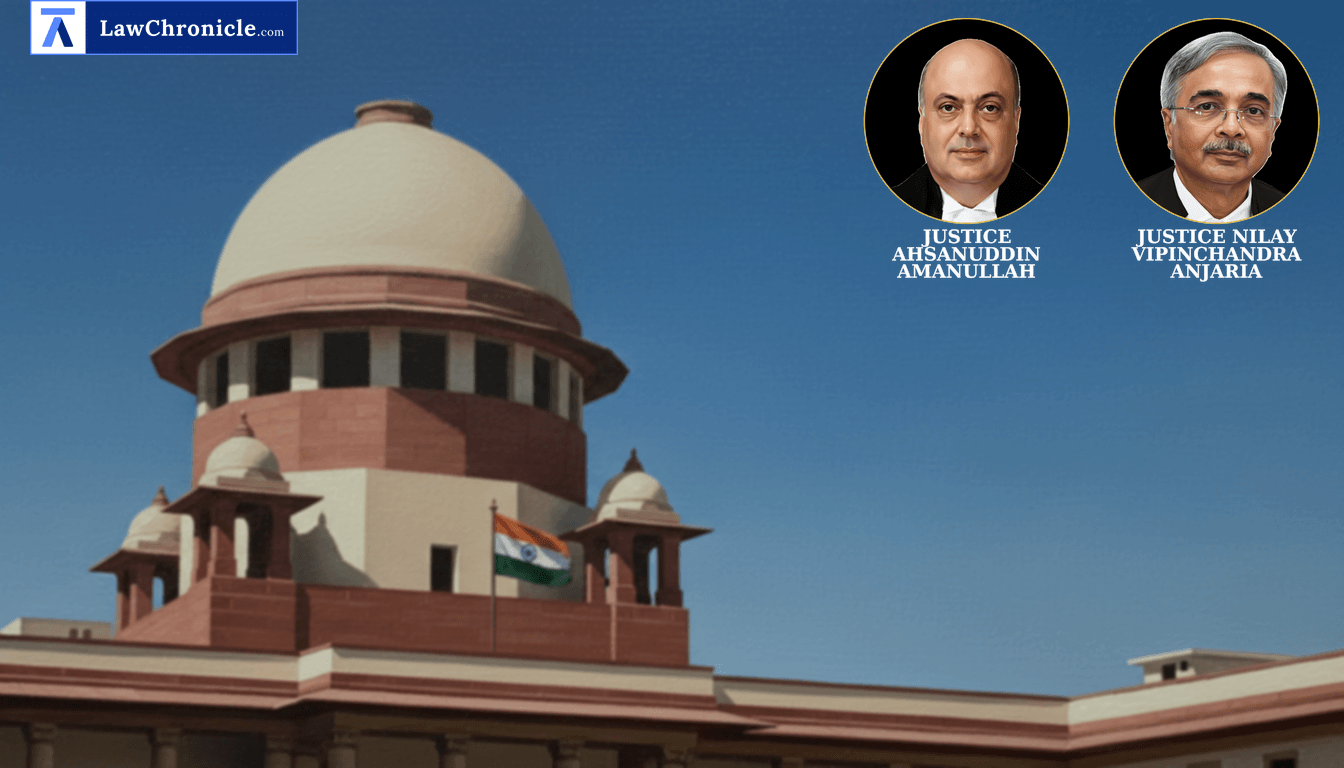
A bench of Justice Ahsanuddin Amanullah and Justice N. V. Anjaria heard civil appeals arising from orders of the High Court of Judicature at Allahabad that had affirmed a Services Tribunal direction reinstating a police constable who had been earlier terminated on grounds relating to medical disqualification and alleged concealment of that fact.
The Court allowed the appeals and set aside the Impugned Judgments, restoring the termination order while modifying equitable aspects of relief. The Court explained that the central question was whether a person who did not satisfy basic eligibility criteria for appointment could retain that appointment once ineligibility was established.
The Court, in its reasoning, observed: However, it is not in dispute that the Respondent never disclosed before the Superintendent of Police, Jalaun District, that he had knock knee. Pausing here, it was well within the Respondent’s knowledge that earlier his appointment was cancelled on this very ground. Unfortunately for the Respondent, we are of the opinion that such act is nothing short of deliberate suppression for the reason that the Respondent was aware that such disclosure, per se, would disentitle him from even being considered for the post of Police Constable. Despite this, the Respondent represented himself as being entitled to the said post. This would be an act in the realm of suppressio veri and suggestio falsi. The Court also recorded that "Lack of eligibility goes to the root of the matter and appointment, wrongly made, cannot be sustained once the factum of ineligibility, on the relevant date, comes to light."
Background
The appeals arose from a long sequence of events beginning with large scale recruitment for Police Constables in 2005 through 51 district Recruitment Boards, subsequent inquiries into irregularities, and multiple rounds of litigation and provisional appointments. The Respondent was initially declared medically unfit on account of a "knock knee deformity" and his appointment was cancelled; later, after interim judicial directions and a policy exercise, he was provisionally reinstated in 2013. Thereafter, departmental proceedings were initiated on allegations that he had obtained re-appointment by concealing his medical condition, a charge that culminated in termination by the Superintendent of Police, confirmation by appellate and revisional authorities, and successful interference by the Services Tribunal which was, in turn, upheld by the High Court.
The Appellants relied on the principle that "fraud unravels everything" and invoked precedent such as Vishnu Vardhan v State of Uttar Pradesh to argue that the Respondent’s appointment could not survive concealment of a disqualifying fact. The Respondent countered that the charges of concealment were not proved, that his re-appointment occurred with bona fide disclosure, and that he sought protection under Section 47(1) of the Persons With Disabilities (Equal Opportunities, Protection Of Rights And Full Participation) Act, 1995 on the ground that the knock knee deformity developed while in service. Counsel for the Respondent also emphasised the limited scope of this Court's review under Article 136 of the Constitution of India, 1950, relying on authorities such as Collector Singh v L.M.L. Ltd., Kanpur ( "(2015) 2 SCC 410": 2014 CaseBase(SC) 639) to submit that concurrent findings should not be lightly disturbed. The appellants further pressed procedural objections and placed reliance on decisions including M/s Associated Switch Gears and Projects Ltd. v State of U.P. to contend that enquiry and disciplinary processes must remain within the bounds of the show cause notice.
After scrutinising the record, the Court found that the Respondent had not disclosed his prior termination for knock knee when seeking parity for provisional appointment and that this omission amounted to deliberate suppression. The Court observed that the authorities also failed in due diligence but held that such failure did not absolve the Respondent of his duty to disclose a disqualifying condition. The Court directed that any similarly placed candidates still in service should be reconsidered for medical fitness following due procedure within three months. On the remedy, the Court restored the termination, directed that amounts paid to the Respondent for periods he actually worked shall not be recovered, and ordered that any unpaid dues for periods of actual service be paid within four weeks with interest at 6% per annum. The Court granted liberty for procedural actions and imposed a modest deposit of Rs.5,000 to the Supreme Court Bar Clerks Association Welfare Fund Trust to be filed within two weeks, while refraining from awarding costs against the Respondent.
Case Details:
Case No.: CIVIL APPEALS NOS. OF 2026 [@ SPECIAL LEAVE PETITIONS (CIVIL) NOS.11145-11146 OF 2025]
NeutralCitation: 2026 INSC 394
Case Title: STATE OF UTTAR PRADESH AND ORS. v AJAY KUMAR MALIK
Source: 2026 CaseBase(SC) 344
 Breaking News