


SC Directs SIT Probe Into Fraudulent Sale Of Spiritual Society Properties
 Copy Link
 Share
Share Save
Save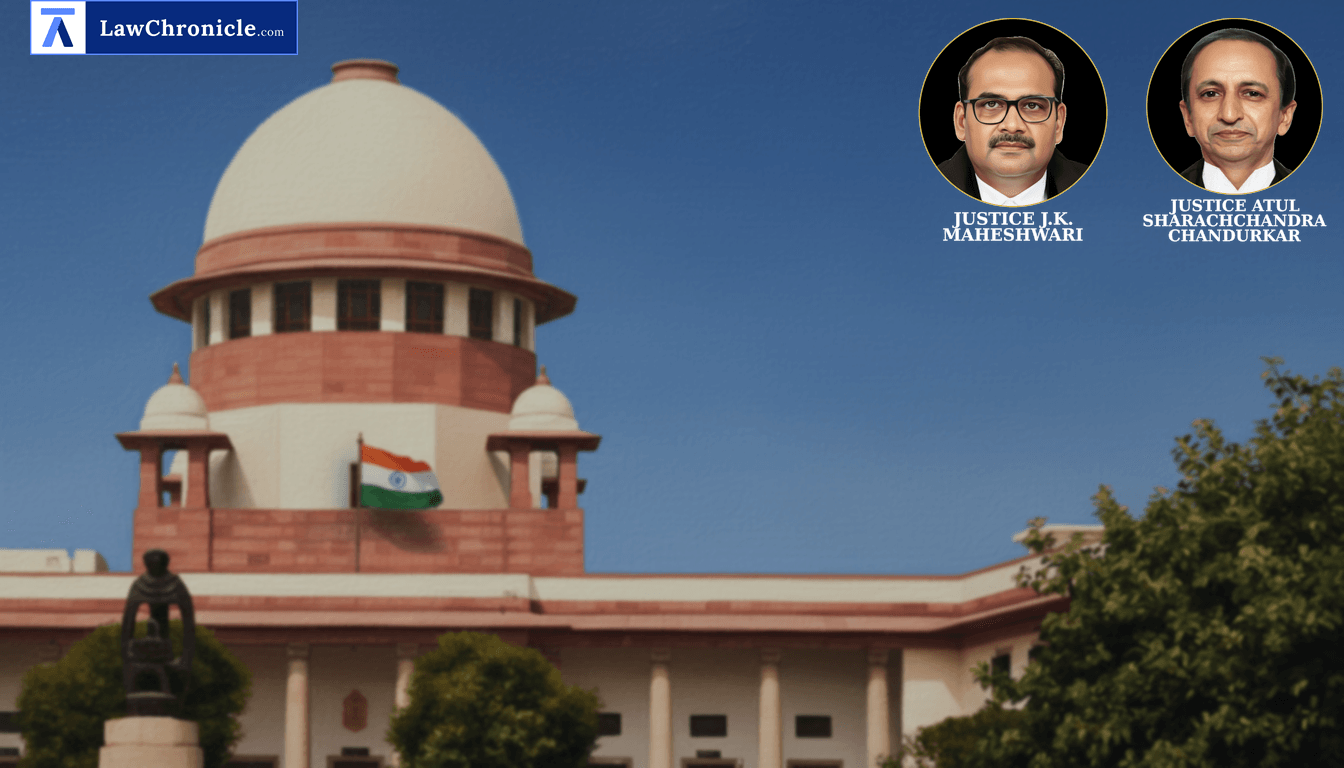
In a significant move to curb organized land scams involving spiritual institutions, the Supreme Court has directed the constitution of a Special Investigation Team (SIT) to investigate the repeated fraudulent alienation of freehold lands belonging to the Spiritual Regeneration Movement Foundation of India.
A bench comprising Justice J.K. Maheshwari and Justice Atul S. Chandurkar heard the appeal challenging an interim order of the Allahabad High Court. The High Court had allowed an investigation to continue against the accused but restrained the filing of a police report, relying on the precedent in Pradnya Pranjal Kulkarni v. State of Maharashtra. The Supreme Court found such a blanket stay on filing a charge sheet unsustainable, particularly in cases involving repeated allegations of forgery and unauthorized land sales.
Court's Rationale on Investigation and Charge Sheets
The Bench emphasized that while Courts can exercise discretion to prevent coercive steps, staying the filing of a charge sheet interferes with the statutory duty of the police. The Court distinguished the present facts from Pradnya Pranjal Kulkarni v. State of Maharashtra, noting that the latter explained jurisdictional nuances under Article 226 of the Constitution of India rather than providing a mandate to stall investigations.
The Court, in its reasoning, observed: "In our view, the Court can exercise the discretion for not taking coercive steps till the matter is pending but the direction not to file the charge sheet in reference of judgment in the case of Pradnya Pranjal Kulkarni v. State of Maharashtra is wholly unjust as the facts of the judgment of Pradnya Pranjal Kulkarni v. State of Maharashtra are completely on different footing wherein this Court has explained the scope of jurisdiction of the High Court while entertaining the petition under Article 226 of the Constitution."
Formation of SIT to Combat Land Mafia
Recognizing the complexity of the alleged land scam spanning multiple states and FIRs, the Court invoked principles from Pratibha Manchanda & Anr. Vs. State of Haryana & Anr. ( "(2023) 8 SCC 181": 2023 CaseBase(SC) 755) to ensure an unimpaired probe. The Court noted with concern that despite pending litigations and injunctions, unauthorized groups continued to sell society land using forged documents.
The Court has following directions:
"...direct under the supervision of Chief Secretary of the Uttar Pradesh an SIT to be constituted wherein the Registrar of Societies shall be made one of its members who can disclose the lands belonging to the society concerned and thereafter it should be found out that how the lands belonging to the society have been alienated or transferred to any third party without the permission of the society. The fact-finding enquiry be conducted with respect to the lands already sold by any person other than the original office bearers of the society and the report be handed over to the Police concerned within a period of three months on the basis of which cognizance be taken by the concerned Police Station, if the act of the persons involving is found to be fraudulent involving mens rea committing offence. Till the SIT submits its report and the investigation is completed by the Police no coercive action shall be taken against respondent No. 2, but it is directed that all the accused persons shall cooperate in SIT as well as in investigation. It is made clear that the SIT shall deal with all the people at par uninfluenced by unknown force and to maintain the rule of law."
Background:
The dispute centres on the Spiritual Regeneration Movement Foundation of India, a society registered under the Societies Registration Act, 1860. Following the death of its founder, Maharishi Mahesh Yogi, two factions emerged claiming management rights. The appellant alleged that an unauthorized group led by G. Ram Chandramohan had been selling the society's freehold lands in Uttar Pradesh, Chhattisgarh, and Madhya Pradesh using forged documents and power of attorney.
Several FIRs were registered under various sections of the Indian Penal Code, 1860 including Section 420 (cheating) and Section 467 (forgery). Despite an ex-parte injunction from the Delhi High Court in 2011 to maintain status quo, the property sales allegedly continued. The current appeal arose from an FIR lodged in Noida, where the High Court had stayed the filing of the charge sheet under Section 193(3) of the Bharatiya Nagarik Suraksha Sanhita, 2023 (formerly Section 173(2) of the Code Of Criminal Procedure, 1973). The Supreme Court set aside the stay on the charge sheet while providing interim protection from arrest to Respondent No. 2 pending the SIT report.
Case Details:
Case No.: Criminal Appeal No. of 2026 (Arising out of SLP (Crl.) No. 3123 of 2026)
NeutralCitation: 2026 INSC 482
Case Title: Shrikant Ojha v. State of UP & Ors.
Appearances:
For the Petitioner(s): Not Mentioned
For the Respondent(s): Not Mentioned
Source: 2026 CaseBase(SC) 402
 Breaking News