

Allahabad HC Issues Fresh Guidelines for “Trial in Absentia” Under BNSS
 Copy Link
 Share
Share Save
Save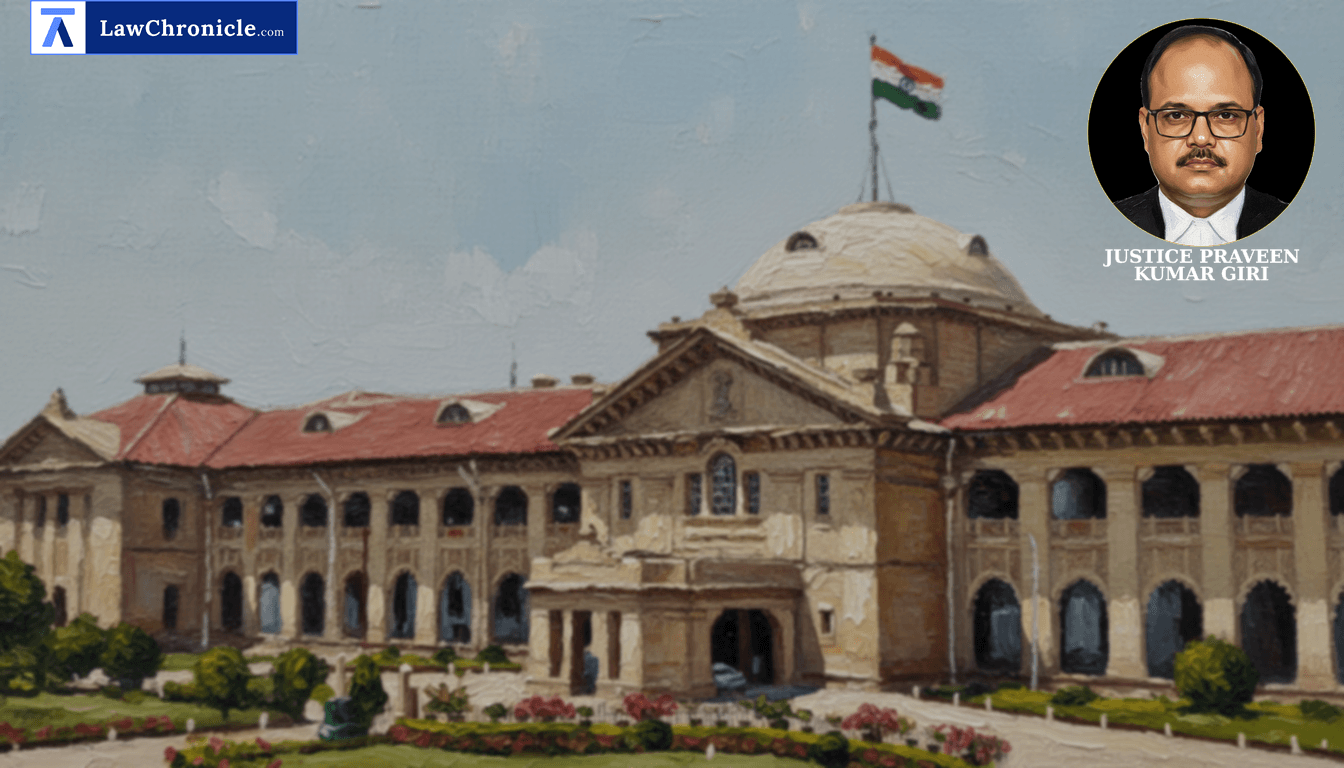
The Allahabad High Court in Ravi Alias Ravindra Singh v. State of U.P. and Another issued mandatory guidelines governing the “Trial in Absentia” of proclaimed offenders. A Bench comprising Justice Praveen Kumar Giri heard an application under Section 528 of the Bharatiya Nagarik Suraksha Sanhita, 2023, challenging the non-bailable warrant issued against the applicant and the ancillary steps taken by the trial court in Session Trial No. 109/2024 arising out of Crime No. 204 of 2020.
Decision Summary
The Court summarised that where an accused who was released on bail failed to attend trial and absconded, the provisions of Section 356 of the Bharatiya Nagarik Suraksha Sanhita, 2023 permitted proceeding in his absence after prescribed safeguards were complied with, and that the procedural regime of the Bharatiya Nagarik Suraksha Sanhita, 2023 must be followed in a manner beneficial to an accused where applicable. The Court, in its reasoning, observed: “Thus to prosecute an absconder accused and to complete trial, certain conditions are mentioned under Section 356 BNSS must be followed.
The conditions are depicted herein below :
1. If a proclaimed offender absconds to evade trial and there is no immediate prospect of arrest, it is legally deemed a waiver of their right to be present and tried in person.
2. The court can record evidence, examine witnesses, and pronounce a judgment even if the accused is not physically present.
3. To ensure transparency and accuracy, depositions and examinations of witnesses should be recorded using audio-video electronic means, such as mobile phones. 38 NA528 No. - 7980 of 2026
4. If the absconding accused does not have lawyer, the court must provide an advocate for their defence at the expense of the State.
5. The trial cannot commence until at least 90 days have passed since the framing of charges.
6. At least two consecutive arrest warrants must be issued with an interval of at least 30 days between them.
7. A notice must be published in a national or local daily newspaper circulating in the area of the accused’s last know residence.
8. The court must inform the accused’s relatives or friends about the commencement of the trial.
9. Trial information must be displayed at a conspicuous part of the accused’s house and at the local police station."
Background
The petitioner, Ravi alias Ravindra Singh, had been charged under Sections 307 and 504 of the Indian Penal Code, 1860 after an FIR dated 24.11.2020 and was released on bail by this Court; the trial court issued a non-bailable warrant on 18.10.2024 when he failed to appear. The High Court reviewed the timeline of proceedings, noting that charges were framed on 14.02.2024 and the accused was absent on multiple dates thereafter, leading to warrants, a proclamation under Section 82 and eventual attachment under Section 83 of the Bharatiya Nagarik Suraksha Sanhita, 2023 as recorded by the trial court.
The learned judge analysed the interplay between the new criminal statute and the earlier law and expressly relied on Deepu and Ors. v State of U.P. and Ors. ( "(2024) 8 ILRA 903 (Crl. Misc. Writ Petition No.12287 of 2024)": 2022 CaseBase(ALL) 1202) to hold that where proceedings continued on or after 01.07.2024 the procedure under the Bharatiya Nagarik Suraksha Sanhita, 2023 would apply to subsequent stages of proceedings; the Court also relied on Hardeep Singh vs. State of Punjab and others ( "AIR 2014 SC 1400": 2014 CaseBase(SC) 496) to reiterate that the stage of "trial" commences only after framing of charges, which informed the application of the ninety-day waiting period under Section 356 of the Bharatiya Nagarik Suraksha Sanhita, 2023. In doing so the Court explained that procedural safeguards in the Bharatiya Nagarik Suraksha Sanhita, 2023 — including issuance of two warrants thirty days apart, publication of a notice in a newspaper, informing relatives and affixing notice at the last known residence — must be complied with before proceeding in absentia. The judgment further observed that where the new statute prescribed timelines and procedural steps, those were required to be followed even if the substantive offences were under the Indian Penal Code, 1860, and that the corresponding provisions of the Code Of Criminal Procedure, 1973 were of relevance insofar as they governed analogous prior practice.
The Court noted several administrative and supervisory directions to ensure compliance with timelines, including monitoring by prosecution authorities and police, mandatory GD entries and electronic transmission of process, and the appointment of amicus curiae where an absconder had no advocate. The application was disposed of with an interim direction: the order dated 18.10.2024 was kept in abeyance for two months from the date of the High Court order, and the trial court was granted liberty to pass appropriate orders thereafter if the accused did not cooperate. The Court also directed circulation of the order to law enforcement and prosecution authorities for implementation and monitoring.
Case Details:
Case No.: APPLICATION U/S 528 BNSS No. - 7980 of 2026
Case Title: Ravi Alias Ravindra Singh Versus State of U.P. and another
Appearances:
For the Petitioner(s): Sanjay Singh
For the Respondent(s): G.A.
Source: 2026 CaseBase(ALL) 165
 Breaking News